Sinkhole vs. Catastrophic Ground Cover Collapse in Florida: Coverage & Claims
Protecting Your Home From Florida’s Hidden Ground Risks
Sinkholes are one of those things many Florida homeowners do not think about until they see cracks in the walls or feel the floor start to sag. After heavy summer rains and storms, it is common for people around Tampa Bay to notice new lines in their tile or small gaps around doors. At first, it might seem like normal settling, but sometimes the ground under the home is changing in a serious way.
Florida has beautiful water, trees, and sandy soil, but under that soil is limestone that can slowly wash away. That is where sinkholes and catastrophic ground cover collapse come in. They are related, but Florida law treats them very differently, and homeowners policies do too. Many people assume any sinkhole problem is covered, then find out the hard way that their policy only covers the narrow event called catastrophic ground cover collapse.
At Florida West Insurance, we live and work here in Oldsmar, so we see how this plays out for real families. We want you to know what your policy may or may not cover, how the law defines these ground risks, and what to do if you think your home is affected. We will walk through the legal terms in plain language, the coverage options, and simple steps to document a claim so your carrier takes it seriously.
Understanding Florida’s Ground Perils Under Your Feet
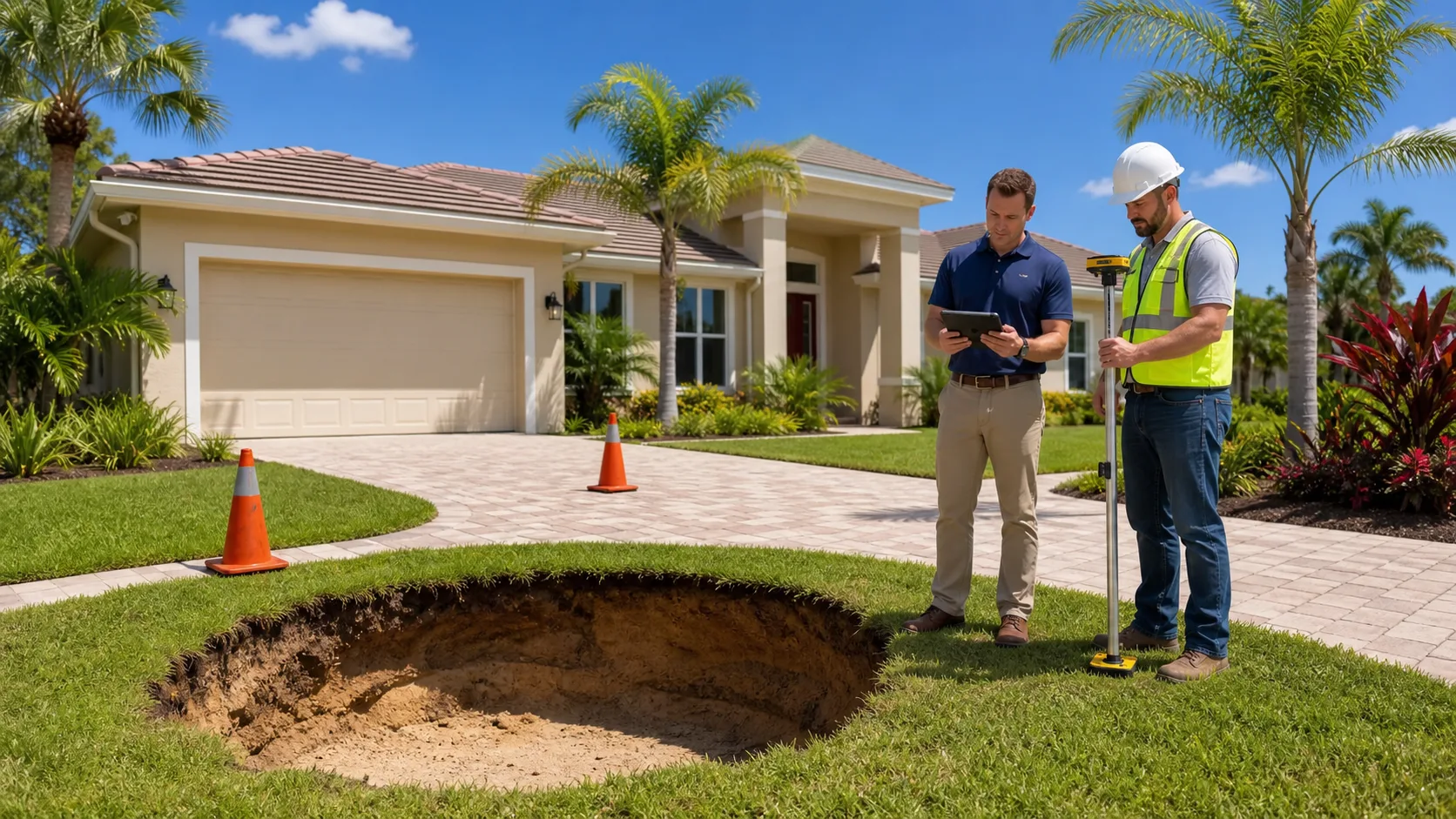
A sinkhole is a hole or depression in the ground caused when the soil and rock under the surface give way. In much of Florida, water can slowly dissolve the limestone underground. Over time, empty spaces form, and then the weight of the soil and structures above can suddenly drop or sink. Heavy summer rain and long wet periods can speed this up by washing more material into those gaps.
Catastrophic ground cover collapse is a special term under Florida law. It does not mean any big sinkhole. It means a very specific type of event with strict conditions. For it to count as catastrophic ground cover collapse, all of these usually have to happen:
- The ground must abruptly collapse, not slowly over months
- A depression must form that you can clearly see with your eyes
- The building must have serious structural damage that affects its foundation or makes it unsafe
- A government agency must officially condemn the home and order everyone to leave
If even one of those pieces is missing, it often does not qualify as catastrophic ground cover collapse. That is where many homeowners get surprised. You might see:
- Cracks in walls, ceilings, or floors
- Doors and windows that suddenly stick
- Sloping floors or a slight tilt in parts of the home
Those can be signs of sinkhole activity, but they may fall short of the legal standard for catastrophic ground cover collapse.
What Standard Homeowners Policies Typically Cover
Under Florida rules, homeowners insurance policies must include coverage for catastrophic ground cover collapse. That means if the ground suddenly fails, your home is badly damaged, and it is condemned, there is usually some protection. However, that built-in coverage does not always apply to less extreme sinkhole damage.
Here is how common situations often break down:
- Major structural failure where the home is unsafe and condemned , this is usually covered as catastrophic ground cover collapse
- Progressive cracking, uneven floors, or smaller shifts from underground activity , this may not be covered unless you have specific sinkhole coverage
- Long-term issues that have clearly been there for years , carriers may see these as pre-existing and may dispute them
Most policies also have exclusions or limits such as:
- Cosmetic-only damage, like small cracks that do not affect structure
- Normal settling of a house over time
- Problems tied to poor construction or lack of maintenance
Each carrier writes its policy in its own way, with different wording and conditions. That is one reason working with an independent agency can help. We can compare homeowners policies from different companies and help you find a balance between cost and the level of sinkhole coverage in Florida that makes sense for your home.
Adding Sinkhole Coverage in Florida to Your Policy
Optional sinkhole coverage is designed to fill the gap between minor cracks and full catastrophic ground cover collapse. It can help pay for structural damage caused by sinkhole activity even if the home is not condemned and even if the collapse is not sudden.
To decide whether to offer this coverage, carriers may look at things like:
- The history of sinkhole activity near your address
- Past claims on the property
- Results from inspections or geological studies
- The age and type of construction of your home
Sinkhole coverage often comes with its own deductible. Many times, this deductible is a percentage of your dwelling coverage limit. That means your out-of-pocket cost for a sinkhole claim can be higher than for other types of claims. It is important to understand that number before you agree to it.
Late summer and fall are busy for storms, heavy rain, and tropical systems. This is also when ground conditions can change faster. The worst time to learn you only have catastrophic ground cover collapse coverage is after you start seeing signs of sinkhole activity. We encourage homeowners to review their coverage before the most active part of storm season so there is time to adjust if needed.
How to Spot Warning Signs Before Damage Gets Worse
Not every crack means a sinkhole, but patterns matter. Some early warning signs around your home may include:
- New or widening cracks in drywall, brick, or tile
- Floors that feel uneven or slope toward one side of a room
- Doors and windows that suddenly stick or have gaps around the frame
- Depressions, soft spots, or open holes in the yard
- Fences, trees, or poles that lean without a clear reason
Pay attention to whether things change fast or stay the same. One small crack that never grows may not be a big deal. Several cracks that get wider over a few weeks, along with sticky doors and a sloping floor, should get checked by a professional.
If you see worrying signs:
- Put safety first. If you think the structure is shifting a lot, get everyone out and contact local authorities or a structural engineer.
- Talk with your insurance agent about what you are seeing and ask about the best next step
- Try not to make permanent repairs until the carrier has a chance to inspect, unless repairs are needed right away to stop more damage, like covering an open hole or broken pipe
Step-by-Step Guide to Documenting a Sinkhole Claim
Ground-related claims are often complex and closely reviewed by insurance companies. Clear, steady documentation can make a big difference in how smoothly the process goes.
If you think you may have sinkhole-related damage, you can start by:
- Taking photos and videos of all cracks, slopes, or depressions
- Stand back and get wide shots, then move in close
- Repeat photos over time if things change
- Keeping a written log of what you see
- Note dates when you first noticed each problem
- Write down if you hear strange pops, thuds, or sudden shifts
- Gathering key papers
- Your current policy and any endorsements
- Past inspection or engineering reports
- Old photos of your home that show what it looked like before
Your carrier may bring in professionals such as:
- Structural engineers to check the safety of the building
- Geotechnical experts to test the soil and rock under your home
- Contractors to give repair estimates
Their reports help the carrier decide what caused the damage and what part of it is covered. When you already have photos, notes, and records ready, it can speed up that review and reduce back-and-forth questions.
As your local independent agency in Oldsmar, we know how these claims often unfold in our area. We can help explain what your carrier is asking for, what certain terms in letters mean, and when it may be wise to request more detail or another opinion.
Secure Your Home Before the Next Stormy Season
As summer rolls on and the most active part of hurricane season approaches, it is a smart time to get ahead of ground risks. A short policy review can clear up what kind of sinkhole coverage in Florida you actually have and how catastrophic ground cover collapse is defined in your contract.
A simple checklist can help:
- Pull your homeowners declarations page and any endorsements
- Ask your agent if your policy includes only catastrophic ground cover collapse or broader sinkhole coverage
- Review your deductibles, including any special sinkhole deductible
- Walk around your home and yard with your phone and take photos as a “before” record
At Florida West Insurance, we focus on helping homeowners in Oldsmar and nearby communities understand their options. As an independent agency, we can work with multiple carriers to tailor coverage to your property’s risk, so underground surprises are less likely to turn into financial shocks when the next round of heavy rain arrives.
Protect Your Home With Trusted Local Sinkhole Experts
If you are worried about how stable the ground is under your home, let us help you review your options for sinkhole coverage in Florida before a small issue becomes a big problem. At Florida West Insurance, we walk you through your current policy, explain your real level of protection, and identify any gaps that could leave you exposed. Reach out today through our contact page so we can help you protect your property with the right coverage.
 Previous Post
 Next Post